
Description

If you are avoiding certain foods, relying on denture adhesive every day, or hesitating to smile in photos, you’re not alone, and the problem does not need to be permanent. You may be looking for solutions to missing teeth, loose dentures, dental pain, broken teeth, cosmetic concerns, or sudden emergencies. At Carter-Rockbridge General Dentistry, we focus on addressing the root cause of various dental problems rather than simply managing symptoms. Mini dental implants are one option we offer to stabilize dentures or replace missing teeth. Compared to traditional implants, they require less surgery, cost less overall, and allow for a faster recovery. Schedule a free screening and get clear answers about your options.

Keywords Dental Implants, Mini Dental Implants, Dentures, Implant Dentures, Sedation Dentistry, Oral Surgery, Tooth Extraction, Emergency Dentistry, Botox, Missing Teeth, Porcelain Veneers, Cosmetic Dentistry, Dental Crowns, Same-Day Dentistry, Dental Bridges, Implant Bridges, Root Canal, Orthodontics, Clear Aligners, Sleep Apnea, Gum Disease, General Dentistry, Teeth, Dentist, Dentistry, Pediatric Dentist.

Reviews

This listing was not reviewed yet:

Opening hours

Payment Options

Cash American Express Visa MasterCard Check Discover Financing
  • Dental Implants

    If you’ve lost a tooth, it’s easy to think that replacing just the part you can see is enough. But real, lasting dental work goes deeper. Teeth aren’t just for smiling. They help you chew, speak clearly, and keep your jawbone healthy. When one goes missing, it can affect much more than you might expect. At Carter-Rockbridge General Dentistry, we offer solutions that support your overall health and long-term health, rather than just filling the gap. Dental implants, in particular, are one of the most reliable and natural-feeling options available today. Dr. Stingley is proud to offer both traditional and mini implants to meet a wide range of needs. What Is a Dental Implant? A dental implant is a small post (usually made of titanium) that we place into your jawbone. Think of it like a new tooth root. Over time, it settles in and integrates with the bone, creating a stable foundation for a crown, bridge, or denture. Whether you’ve lost teeth from decay, gum disease, injury, or age, implants can hold everything in place. They’re strong, stable, and meant to last for decades with proper care. What Are the Benefits of Dental Implants Over Other Options? You want to make sure you have a house on solid ground (not quicksand!) because you don’t want to build a beautiful home and then watch it all cave in. That’s how we think about dental work, too. When it comes to replacing teeth, the foundation matters. Dental implants give you that strong foundation. Unlike traditional dentures, which rest on your gum ridge and can shift around, implants are anchored into the jawbone. That means you can eat and speak without worrying about your teeth slipping or falling out. They’re also more comfortable since there’s no bulky plastic covering the roof of your mouth, no sore spots from rubbing, and no goopy adhesive needed! Once healed, most patients say implants feel like their real teeth. If you’re missing just a few teeth, you might be thinking about a partial denture or a bridge. These options can work for some folks, but they rely on the teeth next door for support. Over time, that can add excess stress to these initially healthy teeth, creating new problems.

    Video: Dental Implants

  • Mini Dental Implants

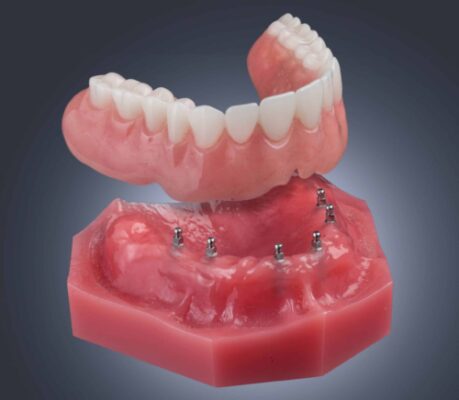
    Your smile has a story. Maybe it includes years of dental anxiety, missing teeth, or treatment you never quite got around to. Maybe you’ve put everyone else first and pushed your own care to the side. Whatever your past looks like, we’re here to tell you: it’s okay to start now. At Carter-Rockbridge General Dentistry, we believe in second chances. When you’re ready to move forward, we have solutions that make taking that step feel easier and more comfortable. Mini dental implants, for example, offer a simpler, gentler, and more affordable way to replace missing teeth and reclaim your confidence. We have helped countless patients who were tired of poorly fitting dentures, frustrated with how their teeth functioned, and ready for a long-lasting solution that didn’t break the bank. With minimally invasive mini implants, you don’t have to wait for life to slow down. You don’t have to feel embarrassed. You just need to take the first step. What Are Mini Dental Implants? Long Description Mini implants (right) are smaller versions of traditional implants (left), featuring a more streamlined design. Mini dental implants do the same job as traditional dental implants: they offer a permanent way to replace missing teeth. However, they’re much smaller and simpler in design. A conventional dental implant is made of multiple parts: the implant post (which goes into the jawbone) and an abutment that connects the implant post to the new crown, bridge, or denture. It’s a strong system, but it requires more bone for secure placement. Visually, a standard implant post is wider, like a thick screw, so the oral surgery technique needed to anchor it in the bone is more invasive. It also requires more healing time and a few separate procedures spread out over several months. A mini dental implant, on the other hand, is a single solid piece and much slimmer. Imagine a toothpick-sized titanium post with a ball-shaped end that the crown, bridge, or denture attaches to. Because it’s so small, Dr. Stingley can place it very gently, with minimal disruption to your bone and gums. That means no stitches, no complicated surgery, and a much faster path to a complete smile.

    Video: Mini Dental Implants

  • Same-Day Dental Implants

    “Have to catch an early train, got to be to work by nine. And if I had an aeroplane, I still couldn’t make it on time.” In their hit “Manic Monday,” The Bangles captured what so many of us feel: life moves fast, and there never seems to be enough time. For many folks, dental care ends up at the bottom of the to-do list because it feels too time-consuming. At Carter-Rockbridge General Dentistry, we know your time matters, and we believe your care should reflect that. With same-day dental implants, we offer a convenient and effective tooth replacement option for patients who want immediate results without weeks of waiting. If you’re looking for a solution that’s fast, gentle, and easy to fit into your schedule, you’re in the right place. Dr. Stingley and her team combine experience, honesty, and out-of-the-box thinking so you can get back to smiling sooner than you thought possible. What Are Dental Implants? A dental implant is a long-term solution for replacing a missing or failing tooth, but getting one has traditionally required multiple visits and months of healing between steps. In most cases, the process involves removing the tooth, allowing the area to heal, placing the implant, waiting 4-6 months for it to integrate with the bone, and finally placing the crown. While effective, this timeline just doesn’t work for everyone. Same-day dental implants use a more streamlined approach. When appropriate, we can extract a tooth, place an implant, and secure a temporary tooth in the same visit. If the tooth is already missing, even better: we can place the implant and a temporary restoration in a single appointment. For patients who need to return to work, school, or daily life without delay, same-day implants provide real relief. You’ll experience fewer appointments, immediate improvement in appearance and function, and peace of mind from knowing that you won’t need to leave with a gap in your smile.

    Video: Same-Day Dental Implants

  • Emergency Dentistry

    When a dental emergency strikes, you need prompt treatment and pain relief. While most emergency situations call for an emergency room visit, we recommend seeking an emergency dentist for any and all of your urgent dental care needs. These professionals are experienced dentists, well-equipped with the proper knowledge and tools to not only provide relief but also deliver effective treatment. If you’re experiencing a dental emergency in Norcross, GA, contact Carter-Rockbridge General Dentistry for a same-day emergency appointment! At our office, we take your dental emergencies seriously. As dentists, it is both our pleasure and responsibility to care for your smile. When To Call an Emergency Dentist According to the American Dental Association (ADA), a dental emergency is a potentially life-threatening dental issue that requires immediate treatment. These treatments often aim to stop bleeding, remedy an infection, or alleviate severe pain. However, it’s not always clear to patients when an emergency appointment is necessary. Some signs you may need to visit an emergency dentist include: Sudden and persistent tooth pain Severe swelling of the face or jaw Constant or uncontrollable bleeding Broken or damaged teeth Knocked-out or partially dislodged teeth Painful, red, or bleeding gums Injury to the tongue, lips, gums, or cheeks The best way to find out what care you need is to call an emergency dentist. At Carter-Rockbridge General Dentistry, we will listen to your dental issues and advise you on whether you need an emergency appointment or not. Typically, we can get you in that very same day for treatment. And, even if you call us after hours, we may still be able to come in and treat you! The only way to know for sure is to give us a call as soon as possible.

    Video: Emergency Dentistry

  • Implant Dentures

    Traditional dentures have been around a long time, and for some people, they’ve worked well enough. But Dr. Stingley sees what patients go through when dentures don’t fit right: sores, slipping, trouble eating, and a lot of frustration. At Carter-Rockbridge General Dentistry, we offer implant dentures because patients deserve a better experience. Implant support gives your denture a stable foundation, so it stays in place and functions more like real teeth. If your current denture moves around or needs adhesive, we can talk through your options and make a plan that works best for you. Understanding Implant Dentures If you’re missing all your teeth on the top or bottom (or both), implant dentures can give you a more stable, comfortable option than traditional dentures. The denture itself connects securely to a series of dental implants, which we place throughout your jawbone. With a more stable denture, it’s easier to eat, talk, and smile without worrying about it shifting or needing to reapply adhesive throughout the day. Implant dentures offer important oral health benefits, too. Because they’re anchored in place, they eliminate the gum irritation and sore spots often caused by loose, ill-fitting traditional dentures. More importantly, the implants act like artificial tooth roots. That matters because your tooth roots apply healthy pressure to your jaw, which keeps it strong. Without this stimulus from the roots, the jawbone deteriorates. But with implants in place, that bone stays solid and healthy. This helps protect your facial structure and supports long-term oral health. Essentially, implant dentures give your teeth a solid foundation, so they feel more natural, function better, and stay where they belong. In many cases, Dr. Stingley can even secure your existing denture to implants, helping you gain these benefits without the cost of starting over.

    Video: Implant Dentures

  • Sedation Dentistry

    Anxiety and fear of the dentist are common across all age groups. In fact, they’re one of the biggest barriers to maintaining healthy oral habits and getting the dental care you need. At Carter-Rockbridge General Dentistry, we understand that fear is real, and we don’t dismiss it. For us, great care begins by listening and taking the time to understand each patient’s concerns. That belief drives us to establish trusting relationships with our patients, since trust is one of the most effective ways to help patients overcome dental anxiety in the long term. But for patients who need a little extra support, we offer sedation dentistry to make care more comfortable. It’s an option designed to meet you exactly where you are and to help you move through your treatment plan confidently. Trust Is the Foundation of Comfortable Care At Carter-Rockbridge General Dentistry, comfort starts with trust. Dr. Stingley believes that before any treatment begins, there must be a strong relationship between you, the patient, and your care team. You should feel confident in your care, and Dr. Stingley and the team should understand your needs, concerns, and boundaries. That trust is built through conversation and education, not rushing. Dr. Stingley takes time to listen, explain, and help you feel at ease. She often teaches simple breathing techniques to help calm the body and reduce tension naturally. For many patients, learning to slow down and relax can make a powerful difference. She also reassures patients that they are in control throughout their visit. If you feel uncomfortable at any point, you can raise your hand to pause treatment, ask a question, or adjust your position. Knowing you can stop at any time is an important step in easing dental anxiety. This approach helps many apprehensive patients realize they don’t need heavy sedation to feel comfortable. When fear is replaced with understanding and trust, the dental experience becomes far less stressful, and in many cases, surprisingly positive. As Dr. Stingley often sees, patients who once avoided dental care frequently leave our practice relaxed, relieved, and even laughing.

    Video: Sedation Dentistry

  • Tooth Extraction

    Shakespeare’s Romeo and Juliet gave us the phrase “parting is such sweet sorrow,” a line that captures the difficulty of saying goodbye even when separation must occur. That sense of reluctance often appears when a tooth needs to be removed. Losing a natural tooth is never ideal, but extraction can bring an end to pain or infection once other treatments are no longer effective. A dental extraction is not a first-line recommendation. It becomes part of the discussion only after decay, gum disease, trauma, or impaction has progressed beyond what conservative care can predictably manage. In those situations, removal serves a clear clinical purpose: stopping the source of the problem and allowing healing to begin. Understanding Tooth Extractions There are several signs you may notice that suggest a tooth should be evaluated for possible removal. These symptoms do not automatically mean an extraction is required, but they do signal that something is no longer functioning as it should. When a tooth can be repaired, treatments such as fillings or dental crowns are always considered first. Extraction enters the picture only when a tooth is too damaged, infected, or obstructed to be saved predictably. You may notice: Persistent tooth pain that does not improve Pain or discomfort when chewing or biting Swollen, tender, or irritated gum tissue Jaw pain, soreness, or stiffness near a specific tooth When a tooth is severely decayed or infected, extraction can provide significant relief by removing the source of pain and limiting bacterial spread to surrounding teeth and tissue. In some cases, timely removal also helps prevent more complex problems from developing later.

    Video: Tooth Extraction

  • Oral Surgery

    Sometimes your mouth needs more than a routine fix. That’s when oral surgery may become part of your treatment plan. At Carter-Rockbridge General Dentistry, Dr. Stingley doesn’t make that call lightly: she only recommends surgery when you need advanced treatment to support your health. If you need a tooth removed, bone rebuilt, or an infection controlled, Dr. Stingley will explain what’s going on and walk you through how she plans to help. Nothing is rushed. Nothing is cookie-cutter. She makes every recommendation with your needs in mind. When Is Oral Surgery Needed? Oral surgery isn’t always the first step, but sometimes it’s the right one. We might recommend it if you have a tooth that can’t be saved, need a bone graft for an implant, or have an issue like an impacted tooth or tori that’s causing problems. We focus on what’s causing the issue, not just the symptoms you’re feeling. Once we know what we’re dealing with, Dr. Stingley will walk you through your options and help you decide what makes the most sense for your health and comfort. Will Oral Surgery Hurt? Long DescriptionDental work doesn’t have to hurt. A lot depends on the time and care your dentist puts into your treatment. At Carter-Rockbridge General Dentistry, patients are often surprised by how little discomfort they feel during oral surgery. Dr. Stingley numbs the treatment area gently, without needing numbing cream to make you comfortable. Her gentle touch and no-rush approach also mean you won’t be pushed through the process before you’re ready. If you’re feeling nervous, we understand that, and we can help. Dr. Stingley has a way of putting people at ease. She takes the time to talk with you, calm your nerves, and build trust. But if you need a little more than that, we also offer sedation to help you relax through the visit. After surgery, you might feel some soreness, but we’ll walk you through how to manage it and what to expect. If something doesn’t feel right, you won’t be left wondering: Dr. Stingley checks in, and you can always reach out. Our goal is to make sure you feel cared for before, during, and after your visit.

    Video: Oral Surgery

  • Full Arch Dental Implants

    According to Colgate, common issues with traditional dentures include difficulty eating, changes in speech, slippage, and ongoing maintenance concerns. For many people, those issues are not abstract or occasional. They show up during normal, everyday moments. When someone starts looking into full arch tooth replacement, it is often because managing dentures has begun to feel like work rather than support. Dentures remain widely used, but that does not mean they function well for everyone. At Carter-Rockbridge General Dentistry, Dr. Gloria Stingley offers full arch dental implants as an alternative that focuses on stability from the start. Full arch implants anchor the teeth to the jaw, providing a fixed point of stability. We often place several mini dental implants in the jawbone to support a complete set of teeth, such as a snap-on denture or a roundhouse bridge. That foundation allows the teeth to stay in place during everyday activities, so chewing and speaking feel more controlled and predictable rather than managed moment by moment. Situations That Call for Full Arch Dental Implants Full arch mini dental implants provide a comprehensive way to replace all the teeth in an upper arch, lower arch, or both. You may benefit from this approach if: You are missing all the teeth in the upper arch, lower arch, or both All the teeth in an arch need to be removed due to gum disease, decay, or another underlying issue You still have some teeth remaining, but they are damaged and cannot be preserved You currently wear traditional full dentures and want a more stable tooth replacement option

    Video: Full Arch Dental Implants

  • Dentures

    Millions of Americans are missing all of their teeth. In Gwinnett County, 1 in 10 older adults is completely edentulous, meaning they’ve lost all of their teeth. According to the CDC, severe tooth loss is 50% higher in people with poor overall health or chronic diseases like diabetes, heart disease, and emphysema. If you are missing all of your teeth or need to have your remaining teeth extracted to preserve your health, dentures can help improve your quality of life. At Carter-Rockbridge General Dentistry, Dr. Stingley is proud to offer implant dentures as a modern alternative to dentures. These options use dental implants to stabilize a full arch of prosthetic teeth. Our advanced tooth loss solutions can restore your bite, enhance your smile, and improve your overall well-being! Traditional Dentures Traditional full dentures are a complete set of teeth on a pink base that mimics the appearance of gums. These removable prosthetics are supported by the gum ridge. Upper dentures have additional acrylic covering the palate (the roof of the mouth) to help them stay in place. While complete dentures replace an entire arch of missing teeth, partial dentures replace one or several teeth. Like full dentures, they sit on an acrylic base. However, partial dentures are made to fit around your remaining natural teeth and are held in place with metal or acrylic clasps. Even though full and partial dentures are custom-fitted to the patient’s oral anatomy, they don’t maintain their original fit for long. This gradual loosening leads to instability and discomfort. Some patients choose traditional dentures because they seem more affordable up front, but the frequent adjustments and maintenance they require add unexpected costs and inconvenience.

    Video: Dentures

  • Full-Mouth Reconstruction

    Everyone deserves a fresh start, and oral health is no exception. For some people, dental concerns build gradually over time. Teeth wear down, old restorations fail, gum disease progresses, and missing or misaligned teeth begin to affect comfort, function, and overall health. When several issues exist at once, addressing them one at a time often falls short, which is when oral health calls for a more comprehensive approach. Full-mouth reconstruction combines multiple dental treatments into a single coordinated plan to restore health, function, and stability across the entire mouth. At Carter-Rockbridge General Dentistry, Dr. Gloria Stingley approaches full-mouth reconstruction as both a clinical process and a collaborative one. She takes the time to understand how each patient arrived at their current condition, what their goals are for the future, and how to develop a plan that supports lasting oral health. What Is Full-Mouth Reconstruction? Full mouth reconstruction is a broad term that describes a coordinated approach to dental care, not a single procedure. It refers to a customized treatment plan that brings together multiple areas of general dentistry to rebuild or replace most or all of the teeth in the mouth. The purpose is to restore oral health, improve function, and address appearance within one connected plan. This approach looks at the mouth as a complete system. Teeth, gums, jaw joints, bite alignment, and bone support all affect how the mouth functions day to day. When several of these elements are compromised, isolated treatments can fall short. A full-mouth reconstruction plan allows us to evaluate how everything works together and address underlying problems in a logical sequence. Every plan is shaped around the individual. Some patients need to restore teeth that are worn, fractured, or weakened. Others need to replace missing teeth, stabilize their bite, or reduce discomfort linked to uneven pressure or jaw strain. Many people experience more than one of these issues at the same time.

    Video: Full-Mouth Reconstruction

  • Dental Crowns

    When an area of the body is affected by illness or injury, our natural healing mechanisms activate. The brain sends signals to produce antibodies that fight viruses or regrow damaged cells, actively trying to heal ourselves in real time. Unfortunately, that same regrowth doesn’t happen with our teeth. Enamel, or the hard outer layer of a tooth, does not regenerate after damage or decay. With no natural healing process, you need a better solution. Fortunately, Dr. Stingley uses dental crowns to restore and protect vulnerable teeth! Traditional dental crowns are among the most common restorative procedures in the U.S. With their versatility and simple placement process, it’s easy to see why they’re so popular. From restoring your ability to eat and speak to filling the gaps in your smile, dental crowns can revitalize your teeth quickly and effectively. Dental Crowns 101 A dental crown is a protective cover that fits over the entirety of a vulnerable tooth. This custom-made cap fits snugly on top of a decayed or broken tooth to blend seamlessly with your remaining teeth, matching their shape, size, and appearance. At Carter-Rockbridge General Dentistry, Dr. Stingley uses tooth-colored dental crowns that also match the shade of your natural teeth, creating an aesthetically pleasing look. Crowns can be made from various materials, including porcelain, metal alloys, or composite material, but are most commonly made of ceramic. The material that is right for you depends on your preferences, budget, the location of the tooth, and the extent of the damage.

    Video: Dental Crowns

  • Dental Bridges

    Missing teeth are a more common problem than you might assume. In the United States alone, around 120 million people are missing at least one tooth, and 36 million are missing all their teeth! Failure to replace these teeth can lead to a variety of oral health complications. Immediately after tooth loss, you may notice difficulties chewing and speaking clearly, as gaps in your smile affect your everyday function. Then, over time, issues like jawbone loss, tooth misalignment, and even changes to your facial structure will arise. But with a dental bridge, Dr. Stingley addresses many of these issues by replacing missing teeth with a strong, natural-looking, and reliable restoration. Schedule your free screening at Carter-Rockbridge General Dentistry in Norcross, GA, to learn what Dr. Stingley can do for your smile! What Is a Dental Bridge? Dental bridges are restorations that replace missing teeth. These structures offer both restorative and cosmetic benefits, making you look and feel better. By “bridging” the gap between teeth, dental bridges are able to replace anywhere from one to multiple missing teeth in a row. The replacement teeth, called pontics, rest where your natural teeth previously were and are typically held in place using dental crowns or implants. However, you’ll need a healthy smile to be eligible for dental bridge treatment. During your free screening, Dr. Stingley will assess your oral health and take care of any underlying conditions like gum disease or root canal infection. Once your smile is healthy, she will move on to restoring your missing teeth with a dental bridge.

    Video: Dental Bridges

  • Gum Disease Treatment

    Good dentistry begins with healthy gums! Dr. Stingley built this practice on the belief that healthy gums are the foundation of everything else we do, so that’s where we focus first. Gum disease often starts subtly, but left alone, it can lead to serious issues like bone loss and tooth mobility. That’s why we pay close attention, even during routine visits. And if you need gum disease treatment, we don’t just offer a standard fix. We’ve invested in technology like the Waterlase dental laser, which lets us target infection more precisely and with far less discomfort than traditional tools. Our goal is to stop the disease, protect what’s still healthy, and give your gums the support they need to heal. We’ll talk with you, show you what we see, and make a plan together. You’ll know what’s happening and why because we don’t believe in rushing, guessing, or keeping you in the dark. What Is Gum Disease and Why Does It Require Treatment? Healthy gums (what we call normal gingiva) aren’t inflamed or irritated. You can gently clean the gum pocket, or sulcus, and it won’t hurt. But when plaque builds up, that’s when the trouble starts. Plaque is full of bacteria, and when it sits too long, the body steps in to help. Red blood cells rush to the area to try and wash away the buildup, which is why inflamed gums—known as gingivitis—bleed easily. The body is doing its best to clean the mouth, but it can’t keep up on its own. Once the bacteria settle in, it’s like they’ve found a home. They start repopulating and forming a little community. As Dr. Stingley puts it, “They’re having a party in your mouth.” And like us, they eat and use the bathroom, and when they do, they release toxins. These bacterial wastes are what cause inflammation and damage. If things go too far, brushing alone might not be enough to reverse damage. You’ll need more targeted treatment to get the infection under control.

    Video: Gum Disease Treatment

  • Root Canal Treatment

    Root canal treatment has developed a reputation that far outweighs the reality of the procedure. The phrase alone tends to make people tense, shaped more by old movie scenes and TV jokes than by real experience. For years, root canals have been portrayed as something to fear, and that image has lingered, even as dentistry has continued to evolve. What is often overlooked is the source of the pain. The discomfort people associate with root canals usually begins before treatment is ever mentioned. An infected tooth can cause pressure, sensitivity, or persistent aching. Root canal treatment addresses that source of discomfort by removing the infection and stabilizing the tooth. The procedure is intended to relieve pain, not cause it. At Carter-Rockbridge General Dentistry, our approach to root canal treatment centers on preserving your natural tooth whenever possible. Modern techniques allow us to remove infection and protect the remaining tooth structure so it can continue to function as part of your smile. A Clear Look at Root Canal Treatment Long Description When people hear “root canal treatment,” they are often juggling several ideas at once. The term sounds clinical, the reputation feels intimidating, and the details can blur together. That reaction usually comes from the name, not from a clear picture of what is happening inside the tooth. Inside every tooth is a soft inner space called the pulp. This area contains nerves and blood vessels and extends down through narrow channels into the root of the tooth. When bacteria reach this inner space, often through a deep cavity or an injury, the pulp can become infected. That infection spreads through these channels, which is why the procedure is called a “root canal.” Root canal treatment removes the infected pulp from the tooth. By clearing out the infection and sealing the canals, the remaining structure can stay in place and continue to function. Children sometimes need similar care. When decay reaches the pulp of a primary tooth and the roots remain healthy, Dr. Stingley will perform a pulpotomy, sometimes called a “baby root canal.” This procedure removes the infected portion of the pulp while keeping the rest of the tooth intact until it falls out naturally. Pulpotomies usually take less time, involve less tissue removal, and allow for a smoother recovery when the infection remains limited.

    Video: Root Canal Treatment

  • Cosmetic Dentistry

    Cosmetic dentistry can transform your smile, but it only works long-term if your teeth and gums are healthy. A strong foundation always comes first. At Carter-Rockbridge General Dentistry, cosmetic care is part of a comprehensive approach that starts with functional teeth and gums. Dr. Stingley spends time explaining how your mouth functions, what your teeth need to remain stable, and which treatments actually support long-term oral health. From there, cosmetic options become a natural extension of care rather than a shortcut. The process stays collaborative and transparent, with space to ask questions, adjust plans, and move forward with cosmetic treatments that make sense for your health and your smile. What Is Cosmetic Dentistry? Long DescriptionCosmetic dentistry usually begins with how your smile looks and what you would like to improve. But at Carter-Rockbridge General Dentistry, we don’t separate appearance from oral health. Instead, we connect the two to create results that look good and last. During your visits, we help you understand which cosmetic options best support your teeth and long-term stability because lasting results go deeper than surface-level improvements. Understanding how your teeth function is an important part of the process because appearance alone does not predict how well a result will hold up over time. Our approach highlights a key distinction between cosmetic and esthetic dentistry. These terms are often used interchangeably, but there’s a difference in focus: Cosmetic dentistry centers on appearance. It improves color, alignment, or uniformity, and it is typically chosen when the teeth are already healthy. Esthetic dentistry takes a broader view. It examines how teeth come together, how they function day-to-day, and how these factors support long-term oral health. Many of our treatments fall under esthetic dentistry, as they restore strength and function while also improving your smile’s appearance.

    Video: Cosmetic Dentistry

  • Dental Veneers

    How you feel about your smile can directly influence how you feel about yourself. We see this connection often in adolescents, but it holds true at any age. While some people are born with a perfect smile, many people aren’t so lucky. Mishapen teeth, misalignments, and stains all affect the appearance of your teeth. But with dental veneers, we can hide these imperfections to completely transform your smile! What Are Dental Veneers? Dental veneers are thin shells that adhere to the front of your tooth, like the way press-on fingernails lie over your natural nail. At Carter-Rockbridge General Dentistry, Dr. Stingley uses porcelain veneers to revitalize your smile. This tooth-colored material not only looks incredibly natural, but it’s also highly durable, withstanding the everyday pressure of biting and chewing. Additionally, its white shine is stain-resistant, which helps keep your veneer smile bright for longer. Long Description Porcelain veneers are a common cosmetic dentistry option for concealing dental imperfections, such as: Minor misalignments Stubborn stains Chips or cracks Mishappen teeth Veneers are completely customizable, allowing you to collaborate with Dr. Stingley to design a smile that aligns with your goals and personality. Together, you can decide on the size, shape, and color of each veneer to create a look that feels just right for you.

    Video: Dental Veneers

  • Pediatric Dentistry

    Children grow quickly, and the habits they form early can last a lifetime. The care, routines, and prevention they experience now shape how their bodies develop and how easily they keep up healthy habits later. Oral health is a key part of this process from the beginning. Teeth, jaws, and bite patterns start developing early, so the support they get during this time is important. Pediatric dentistry focuses on supporting healthy development as it happens. Early dental care helps us track growth, reduce the risk of future issues, and help kids get comfortable with regular dental care. Taking care of children’s oral health early leads to better results over time. It also teaches kids that caring for their bodies is a normal part of daily life, not just something to do when problems come up. What Is Pediatric Dentistry? Long Description Dentists have different training backgrounds and practice styles, and many offices offer a mix of services to help their patients. General dentists are the main providers of dental care. They see patients of all ages and handle routine treatments like cleanings, fillings, and extractions. Some general dentists also take additional courses to add services like endodontics, implants, cosmetic care, or pediatric dentistry. Pediatric dentists go through extra training after dental school. They focus on how children grow and develop, learn about child-specific anatomy, and practice ways to guide behavior and prevent problems while kids’ mouths are still forming. They also learn special techniques and treatments for smaller mouths and growing teeth. Dr. Gloria Stingley uses her specialized training in every part of children’s dental care. She monitors how children’s teeth are developing, addresses issues unique to infants and young children, and helps them become comfortable with visiting the dentist from a young age.

    Video: Pediatric Dentistry

Categories

Dentistry
(770)647-9300 (770)-647-9300 +17706479300 (770)662-5955 (770)-662-5955 +17706625955